Preservation New effort will get genome sequences for entire Endangered Species list Colossal Biosciences will be biobanking tissues from all of them as well.
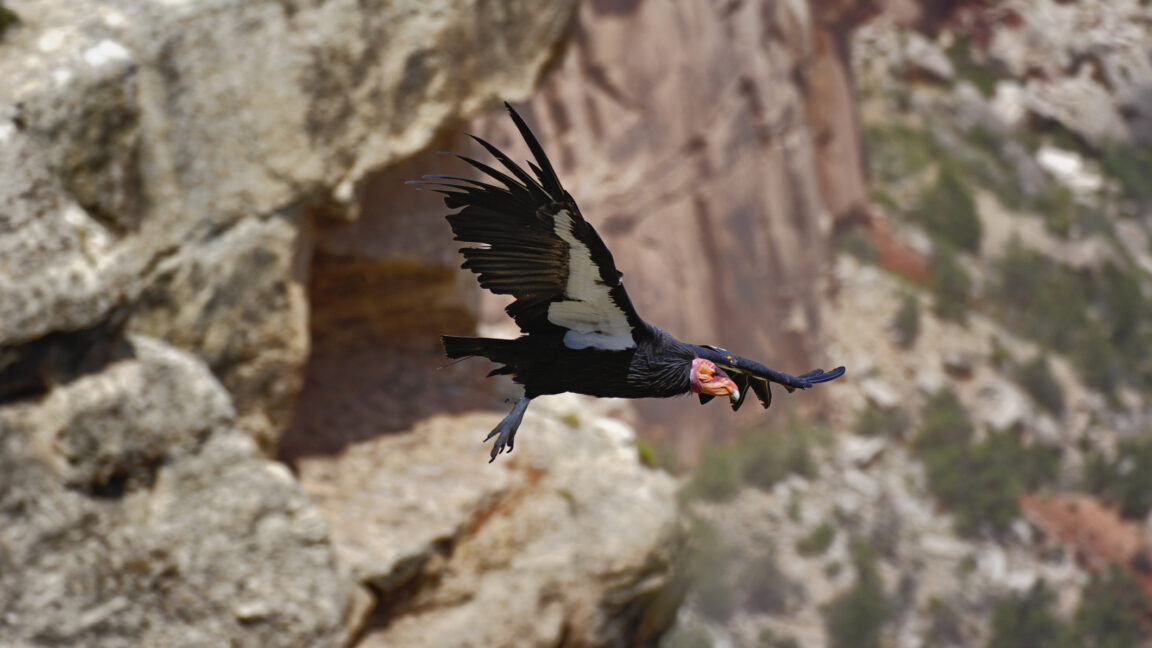
John Timmer – Jun 25, 2026 9:40 am | 11 The California Condor's return to the wild has been one of the big Endangered Species success stories.
Credit: Adam Jones The California Condor's return to the wild has been one of the big Endangered Species success stories.
Credit: Adam Jones Text settings Story text Size Small Standard Large Width * Standard Wide Links Standard Orange * Subscribers only Learn more Minimize to nav The US Endangered Species Act compels the government to identify species at risk of extinction and devise plans to restore populations and the habitats they depend on.
It has seen some spectacular successes, such as the restoration of the bald eagle to much of its original range.
But over 2,300 plant and animal populations remain on the list, requiring ongoing government intervention.
On Thursday, it was announced that all of those species would see their genomes sequenced and tissue samples preserved to aid future conservation efforts.
The work will be done by a partnership between two unexpected parties.
One is the US government, which has generally attempted to undercut the Endangered Species Act as part of its anti-regulatory efforts.
It is joined by Colossal Biosciences, a biotech company that has a controversial take on what actually constitutes a species.
Colossal has always said it had a conservation focus, but its headline-grabbing efforts have been directed toward restoring species that have been driven to extinction.
It intends to do that by developing a combination of gene editing and reproductive technologies that it expects it can profitably license.
But its dire wolf announcement, in which only a tiny handful of genetic changes were edited in to grey wolves, have raised some questions about its seriousness regarding these efforts.
The new announcement, however, has a clear conservation focus.
Colossal has already announced what it’s calling a BioVault , a site where tissues and reproductive cells from at-risk species can be preserved, which requires a lot of power and a constant supply of liquid nitrogen.
The new program will see it add samples from all of the US’s endangered species to that vault.
Those samples will also be used to create whole genome sequences for each of these species.
The announcement calls these “biological materials that enable assisted reproduction, population genetic management, and, where species are lost, the possibility of future restoration.
” The US Fish and Wildlife Service will provide the field collection and sampling expertise to populate this archive.
They (and anyone else who initially obtains samples) will retain the ability to determine how any biological materials that result are used.
“All genomic data generated through this partnership will be deposited into open-access repositories, and provided at no cost, providing the global scientific and conservation community with the reference genomes, population-level sequence data, and bioinformatic tools needed to accelerate recovery efforts far beyond what any single agency or institution could accomplish alone,” the company’s announcement states.
It clarified to Ars that there may be some limits on this.
This is due in part to some samples originating from lands under tribal authority, and in part to specific population information that could put species at risk of poaching.
John Timmer Senior Science Editor John Timmer Senior Science Editor John is Ars Technica's science editor.
He has a Bachelor of Arts in Biochemistry from Columbia University, and a Ph.
in Molecular and Cell Biology from the University of California, Berkeley.
When physically separated from his keyboard, he tends to seek out a bicycle, or a scenic location for communing with his hiking boots.